
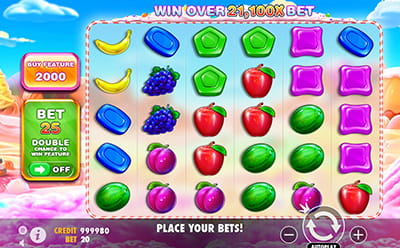
Account verification is often treated as an inconvenience, but it is also one of the clearest points at which players can assess an operator’s security practices. Before using the sweet bonanza casino information available online, Canadian readers should separate the game from the casino account hosting it. The slot does not create accounts, process withdrawals or store identity documents. Those responsibilities belong to the selected operator, so careful checks should happen before money or sensitive information is provided.

Who actually controls your account information?
The game itself has no independent registration or player login. If you play with real money, your session is opened through the account created with the online casino offering the title. That distinction matters because registration details, passwords, identity checks, payment records and account history are controlled by the operator rather than the game developer.
A casino may request an email address, password, legal name, date of birth and other personal details when an account is opened. It may also need to confirm that the player meets the applicable age requirement in the relevant province. These requirements are account-level conditions, not special registration rules attached to the slot.
Verification can occur during registration, before a first withdrawal or when an operator’s monitoring systems identify a need for updated information. A request for government-issued photo identification, proof of address or evidence that a payment method belongs to you can therefore be part of the casino’s process. Read the operator’s privacy notice and terms before submitting anything, and ensure the website address is correct rather than following an unexpected message or advertisement.
What should be checked before documents are uploaded?
Start by confirming that the website uses a secure connection and that its address is spelled correctly. A padlock alone does not prove that an operator is trustworthy, but an unencrypted or suspicious-looking page is a strong reason to stop. Do not upload identification through social media messages, ordinary email replies or unfamiliar file-sharing pages unless the operator’s verified support team has specifically explained the process.
Next, review what the casino says about verification, privacy, retention and access to personal information. The wording should make clear which documents may be requested, why they are needed and how support can be contacted. Requirements can vary, so do not assume that another casino’s procedure, document list or approval time applies to the account you are considering.
Before sending a document, check whether the operator provides a protected upload area inside the account. Follow any instructions about acceptable file type, visibility and expiry dates, but do not alter information that would make the document misleading. If you are unsure whether a request is genuine, pause and contact support through the website’s independently opened help channel. Canada’s official online safety guidance also offers practical advice about protecting accounts and personal information.
How can a stronger login reduce account risk?
Use a long, unique password that has never been used for email, banking, shopping or another gambling account. Reusing credentials creates a chain reaction: if another service suffers a breach, attackers may try the same email and password combination elsewhere. A password manager can generate and store separate credentials without requiring you to memorize every one.
Enable two-factor authentication whenever the operator offers it. A second factor can help protect the account if the password is exposed, although it does not make phishing impossible. Treat one-time codes, recovery links and security questions as private information. Legitimate support staff should not need you to disclose a code that has just arrived on your phone or authentication app.
Keep recovery details current and review notifications for logins, password changes or changes to personal information. Avoid signing in on shared computers, save no password in a public browser and log out when using a device that others can access. On a personal phone, use the latest operating-system updates and a screen lock. These simple habits protect the casino account independently of which game is opened within it.
When is a verification request reasonable, and when is it a warning?
A request can be reasonable when it comes from the operator’s normal account area and relates to identity, age, address or payment ownership. It may also appear before a withdrawal because operators need to confirm who controls the account and the funds. The request should be consistent with the casino’s published terms and should have a clear support route.
Be cautious if someone demands an urgent payment to “unlock” verification, asks for your full password or requests documents through an unverified contact. Pressure, threats, unexplained fees and changing instructions are warning signs. Stop communicating through that channel, take screenshots of relevant messages and contact the casino using its official website rather than the details supplied by the suspicious sender.
Never assume that a successful document upload guarantees approval, a withdrawal or continued access. An operator can ask for clarification or additional evidence under its own terms. Conversely, you should not keep sending documents indefinitely without understanding why they are required. Ask what remains outstanding, how the information will be protected and which formal complaint route is available if the issue is not resolved.
What should you do after verification is complete?
Review the account profile to ensure your name, address, email and other details are accurate. Errors can create delays later, particularly when account information does not match payment records or identity documents. If you move or change your email address, update the account through the operator’s recognised settings rather than opening a second account without permission.
Check the security and responsible-gambling controls available through the casino. The game does not independently provide deposit limits, loss limits, cooling-off periods or self-exclusion. Those controls are managed by the operator and may differ according to the casino and the rules applying in your province. Read how to activate, change or cancel each control before relying on it.
Keep copies of confirmation emails, support conversations and relevant terms, while storing them securely. Monitor account activity and payment statements for anything unexpected. If you no longer wish to use the account, ask the operator about closure, data retention and any unresolved balance. Good account security is an ongoing process: verification is one checkpoint, not proof that every future message or transaction is safe.
Questions about casino account verification
Does the slot require its own identity check?
No. The slot has no separate player registration, login or KYC process. Any identity request comes from the casino hosting it. That operator may ask for identification, address evidence or payment ownership documents according to its own terms, procedures and applicable requirements.
Can I use a demo mode without submitting identity documents?
Some websites may offer a demo version using virtual credits, and that mode does not itself create a withdrawable-money account. Demo availability is controlled by the hosting website, however. Do not assume that demo access proves real-money registration, verification, payment or withdrawal conditions.
Who should I contact if my account is locked?
Contact the casino’s verified support service, because the game has no independent account-recovery team. Use the support page opened directly from the operator’s website. Never share your password or one-time security code, and be cautious of unsolicited contacts promising to restore access for a fee.
